
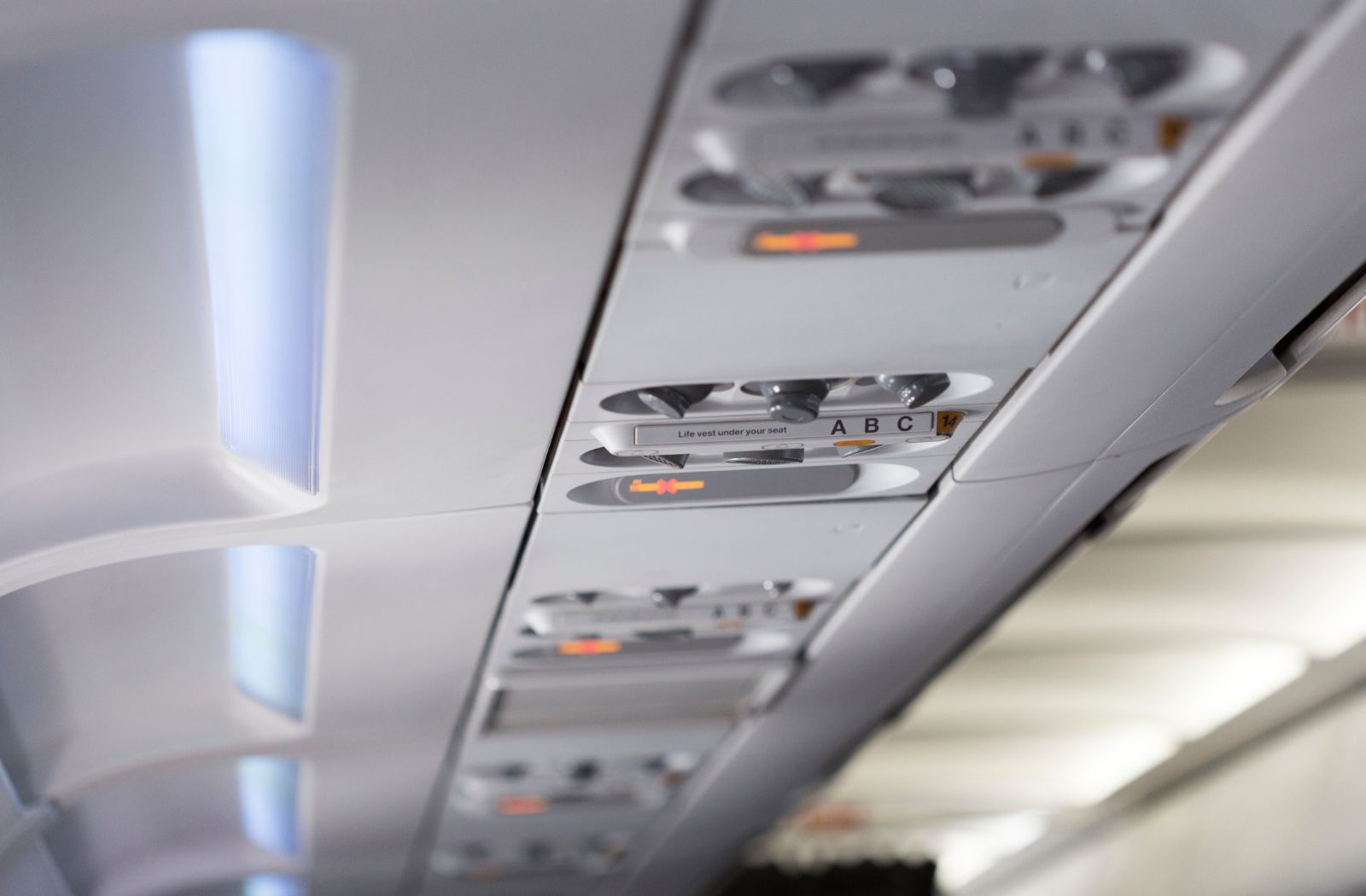
Inside an aircraft cabin, many elements may look simple but serve an important purpose. One of them is the aircraft interior placard. Various signs, labels, and information markers throughout the cabin help passengers and crew understand safety procedures, operational rules, and the location or use of certain facilities.
Aircraft interior placards are more than decorative elements. They are part of the information system inside the aircraft and are designed to communicate important messages clearly. For this reason, factors such as text, symbols, size, layout, and readability need to be carefully considered.
In certain situations, custom aircraft placards can be an effective solution. Customization allows placards to be adapted to the specific requirements of an aircraft operator, the type of information being communicated, and the language understood by passengers.
What Are Aircraft Interior Placards?
Aircraft interior placards are signs, labels, or information markers installed inside an aircraft cabin. Their purpose is to provide passengers and crew with information about safety procedures, operational rules, facilities, and other important instructions.
The source material describes aircraft interior placards as safety and information signs placed inside the cabin to guide passengers and crew.
Although these placards may appear small compared with other components of an aircraft, their role should not be underestimated. Passengers cannot always rely on verbal explanations from cabin crew. For certain types of information, clearly visible signs allow passengers to find important instructions when they need them.
This is why an aircraft placard should be designed with functionality and readability in mind, rather than appearance alone.
Types of Aircraft Interior Placards
Aircraft interior placards can serve different purposes depending on where they are installed and who needs to use the information. Some common categories include emergency signs, operational labels, and control markings.
1. Emergency and Safety Signs
One of the most important types of aircraft placards is signage related to safety and emergency situations.
Examples include signs indicating emergency exits, fire extinguishers, and life jackets.
Passengers may not pay much attention to these signs during a normal flight. However, their importance becomes much greater during an emergency, when passengers may need to quickly identify an exit or locate essential safety equipment.
For this reason, emergency signs should be easy to recognize and read. Clear symbols and concise information can help passengers understand the message without unnecessary confusion.
2. Operational Labels
Aircraft cabins also contain labels that provide information about rules and the use of onboard facilities.
Examples include no-smoking signs, seat belt signs, and instructions related to the use of the lavatory.
These labels help passengers understand basic rules and facilities during a flight. Providing clear information directly inside the cabin can also reduce the need for passengers to ask cabin crew about simple operational matters.
3. Control and Panel Markings
Another category consists of markings used for aircraft controls and operational areas. These may include labels on cockpit switches, circuit breakers, and instrument panels.
Unlike passenger-facing signs, these markings are generally intended for crew members, technicians, or other personnel involved in aircraft operations and maintenance.
Because they are used to identify specific components and controls, accuracy and consistency are particularly important.
Why Is Clear Information Important on Aircraft Placards?
Passengers come from different countries, cultures, and language backgrounds. Their ability to understand a particular language may also vary considerably.
This makes clarity an important consideration when producing aircraft interior signs. Information should be concise, easy to read, and straightforward.
This is particularly important for safety-related information. Passengers should not have to spend too much time trying to understand a message, especially in situations where a quick response may be required.
Symbols can also complement written instructions. When appropriate, combining clear text with recognizable visual symbols can make information easier to identify.
The Challenge of Language in Aircraft Interiors
Language is another factor that should be considered when producing aircraft interior placards.
Aircraft manufacturers commonly provide standard information in English. English is widely used in international aviation, but not every passenger has the same level of English proficiency.
This can become particularly relevant for airlines and aircraft operators serving passengers from countries where English is not the primary language.
In such situations, custom aircraft placards can provide greater flexibility. Information can be adapted to include a local language or other wording that is easier for the intended passengers to understand.
This does not necessarily mean replacing English information. In many cases, additional language options can complement the existing information and make important messages more accessible.
Benefits of Using Custom Aircraft Placards
One of the main advantages of custom aircraft placards is flexibility.
Customization allows the information to be adapted according to the needs of the aircraft operator or specific application. One example is language customization. Information can be prepared in a language that is more familiar to the target passengers.
Customization can also be useful when specific information needs to be displayed in a particular area of the aircraft. The size, shape, wording, and visual presentation of the placard can be considered based on the installation requirements.
However, customization should not simply mean changing the appearance of a standard placard. The primary objective should remain clear communication.
A well-designed custom placard should make information easier to identify and understand while maintaining a clean and professional appearance.
Aircraft Placards Are More Than Decorative Elements
Aircraft interior placards may be small components of the overall cabin interior, but their primary purpose is communication.
An attractive design is useful, but it should never come at the expense of readability. Font size, typography, symbols, spacing, and layout all contribute to how easily passengers or crew can understand the information.
A placard that contains too many visual elements may make the main message difficult to identify. On the other hand, a simple and well-organized design can communicate information more effectively.
This principle becomes even more important when the placard contains safety-related information.
Custom Aircraft Interior Placards for Specific Requirements
Every aircraft operator may have different requirements. Some may need additional signage, while others may require specific languages, layouts, or markings for particular areas of the cabin.
This is where custom aircraft interior placards can provide a practical solution.
Through a custom manufacturing process, the placard can be developed according to predefined requirements. The wording, language, dimensions, shape, and visual appearance can be considered before production begins.
Customization can therefore help ensure that the final product is better suited to its intended application.
At the same time, the design process should remain focused on function. The goal is not simply to produce an attractive placard, but to create a sign that communicates the intended information clearly and effectively.
Conclusion
Aircraft interior placards are an important part of the information system inside an aircraft cabin. From emergency signs and operational labels to control markings, each type of placard has a specific purpose in helping passengers and crew understand important information.
Clear and accessible information is especially important because aircraft passengers come from diverse backgrounds and may not have the same level of understanding of English.
For this reason, custom aircraft placards can provide greater flexibility when specific language, design, size, or information requirements need to be addressed.
Ultimately, aircraft placards are not simply small decorative elements inside a cabin. When designed and manufactured properly, they can help deliver important information in a clear, recognizable, and accessible way.
For companies that require aircraft interior placards, custom aircraft placards, or custom aircraft signs, working with a manufacturer capable of adapting designs and specifications to specific requirements can be an important step toward achieving the right result.